
Download the report
Summary
Budget 2027 puts the public finances on a worse trajectory by repeatedly breaking established spending limits and increasingly relying on high-risk corporation tax.
- Ignoring the speed limit: Spending increases net of tax measures have run at a blistering pace in recent years. A sustainable speed limit of 5% for both was set in 2021. But governments have since budgeted for around 6% growth, before actually delivering about 10% a year on average, double the speed limit. Today’s figures suggest an increase of almost 9% in 2026 if overruns continue at their current pace.
- Spending risky taxes: The Government continues to use high-risk receipts to fund permanent tax and spending measures. It plans to spend about six-in-seven euros of all corporation tax revenues it takes in. Most of it is for current spending. Stripping out the excess corporation tax, the parts that look riskiest, the Government plans to run larger deficits, rising from €12 billion in 2026 to €20 billion in 2030. The Government will effectively have to borrow to put money into its long-term savings funds for ageing costs from next year.
- The Government should be saving more of these risky receipts: This would make its tax base more secure. It would ensure it covers future ageing pressures and weathers the next recession without the need for painful cutbacks or sharp tax increases.
In detail
1. This “Flash Release” gives the Council’s first read on Budget 2027. It explores some of the key areas that the Council will assess in its next Fiscal Assessment Report, due in November.
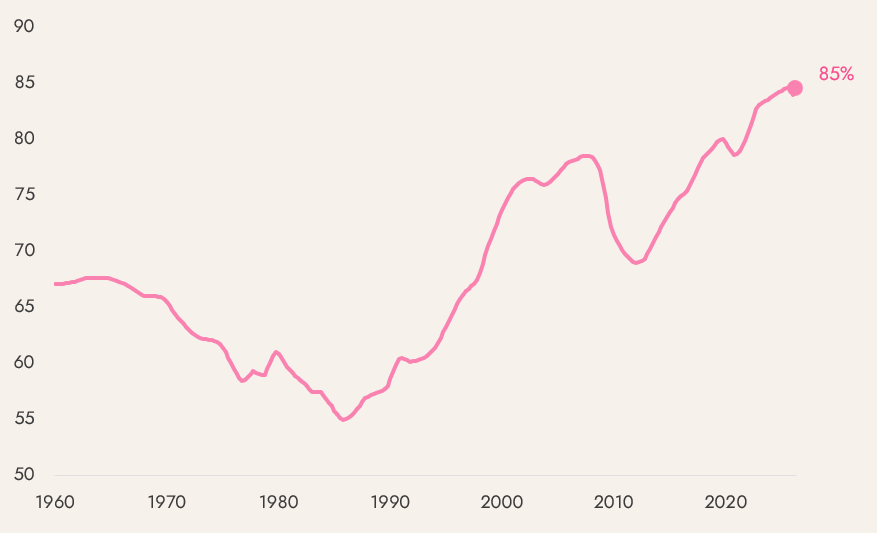
2. The Budget comes at a time when the Irish economy continues to perform remarkably well. A record share of people aged 25–54 years old, peak working age, have jobs. This is more than at any stage even before the financial crisis.
Record jobs numbers
% of people aged 25-54 in employment
3. Wages on average are still rising faster than prices. Pay has outpaced prices by more than 30% since 2014, with real earnings in low-wage sectors up by 34% compared to prices.
Pay has outpaced prices by a third since 2014
Index of real hourly compensation of employees, 2014 = 100
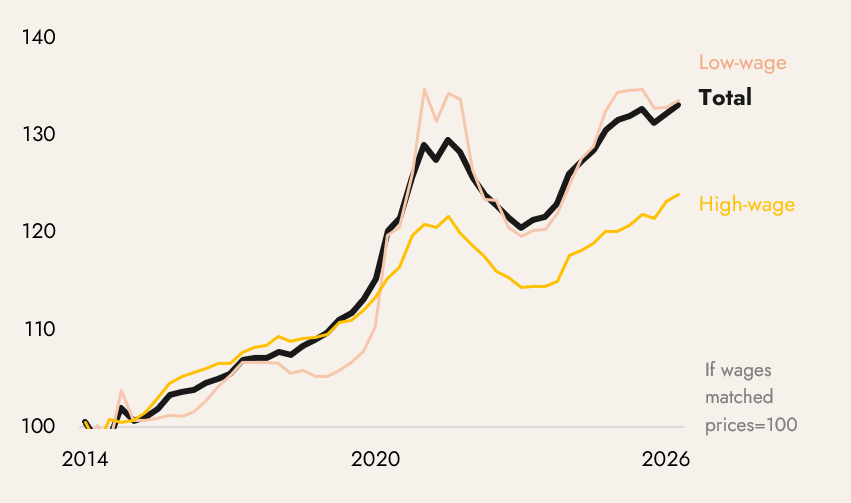
Notes: Real hourly compensation of employees per hour actually worked, deflated by Harmonised Index of Consumer Prices. Sectors are ranked by average 2019 hourly pay. Low-wage sectors are construction; wholesale and retail, transport, accommodation and food; and arts, entertainment and other services. High-wage sectors are information and communication; finance, insurance and real estate; professional, scientific, administrative and support services; and public administration, education and health. Industry and agriculture are in the total only.
4. When the economy is doing this well, a government should normally show restraint and hold fire until the next downturn.
5. But the current Government is attempting to raise spending in many areas, reduce taxes, tackle cost-of-living challenges, and address infrastructure gaps all at once, rather than choosing between them.
6. Successive Irish Governments have raised spending and adjusted taxes at a blistering pace in recent years. A sustainable speed limit of 5% growth in spending and cuts to taxes was set in 2021, but governments since then have budgeted for around 6% growth. In practice, spending has grown on average by double the sustainable limit, that is about 10% each year.
Spending has grown much faster than planned
% average growth of net spending, 2022-2025
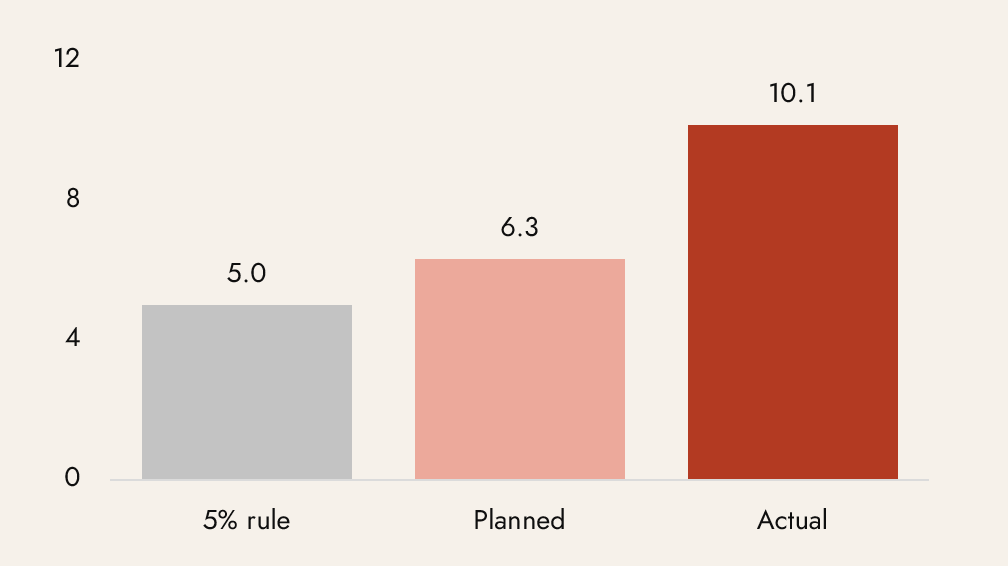
Notes: Net spending is calculated as follows: net spending = general government spending – one-off spending – interest – cyclical unemployment costs – EU co-financed and funded spending – discretionary revenue measures. As a net measure, it recognises tax changes. Tax-raising measures offset spending increases, but tax cuts add to them. These are Fiscal Council estimates.
7. Many of the increases in recent years have emerged after Budget Day. Overspends carry forward and spending estimates, set too low in the first place, get revised up. The Budget shows overspends of €2.1 billion in 2026 for current spending. The overspend would be expected to rise to €2.5 billion if spending continues at its recent pace.
8. Today’s Budget continues this practice. Ireland looks set to increase spending and adjust taxes at a speed of almost 9% this year and at least 6% next year. For 2026, this suggests it will be one of the fastest in the EU.
Among the fastest in the EU
% year-on-year growth in spending net of tax changes, 2026
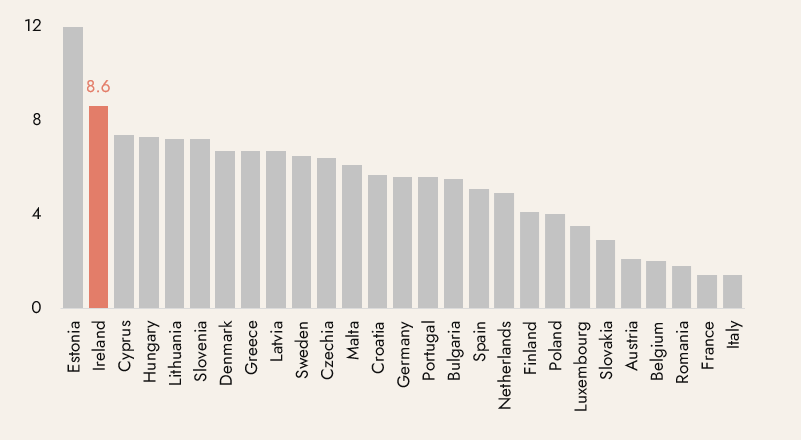
Notes: The bars show estimated net spending growth in 2026 and, except for Ireland, which is based on Budget 2027, they are based on European Commission estimates published in June 2026. For Ireland, we use Fiscal Council estimates based on Budget 2027 figures.
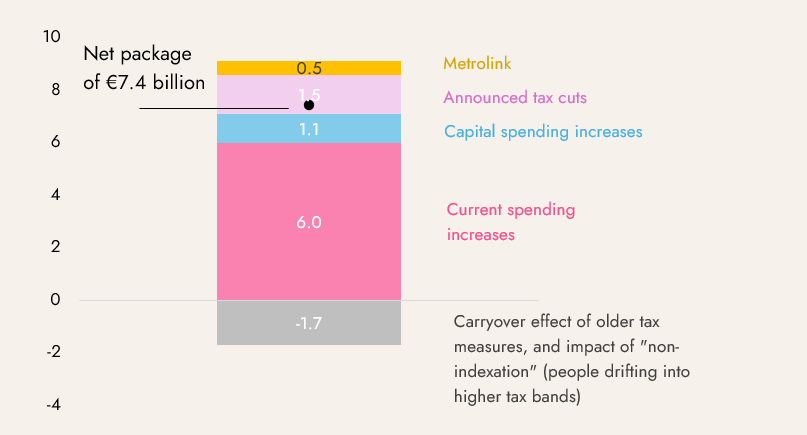
9. The Budget 2027 package amounts to about €7.4 billion. Most of it is on current spending. With record numbers already in work, the ambition to do more in many areas risks pushing up costs rather than delivering more services or infrastructure.
Net €7 billion package is mostly current spending
€ billion, Exchequer figures
Notes: The bars show estimated net spending growth in 2026 and, except for Ireland, which is based on Budget 2027, they are based on European Commission estimates published in June 2026. For Ireland, we use Fiscal Council estimates based on Budget 2027 figures.
10. Overspends look likely to happen again next year. The Department of Health could overspend by almost €1 billion this year in current spending, meaning its ceiling would only rise by €0.7 billion next year. There is also no allocation for the Christmas Bonus.
11. The rate of expansion has meant that more and more of the extraordinary corporation tax the State is collecting is being spent rather than saved. Six in every seven euros of total corporation tax is being spent, with just one-in-seven saved.
Corporation tax will be largely spent, not saved
Share of total corporation tax receipts being spent
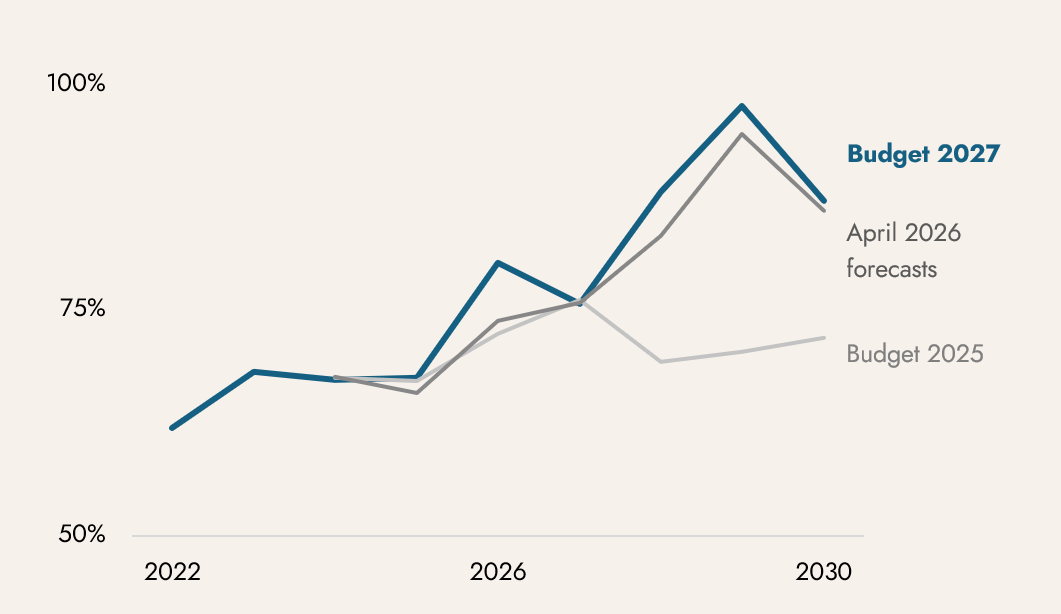
Notes: We treat the general government surplus as what the Government saves, and the rest of corporation tax as spent. “Outturn” shows actual results; other lines show each Budget’s forecasts. All figures exclude the Apple tax proceeds. We only include Budgets with forecasts at least four years ahead.
12. Ireland’s tax base has become heavily concentrated. Just three firms pay nearly half of all corporation tax. And the top 20% of individual earners pay three-quarters of income tax.
13. Excluding ‘excess’ corporation tax receipts, the part that cannot be explained by domestic activity, the Government plans to run large and growing deficits. Based on the Government’s figures, deficits rise to €20 billion in a few years, about the size of the annual spend on education and children. This is despite having low unemployment and a relatively young population.
The underlying budget balance is deteriorating
€ billions, general government budget balance excluding excess corporation tax
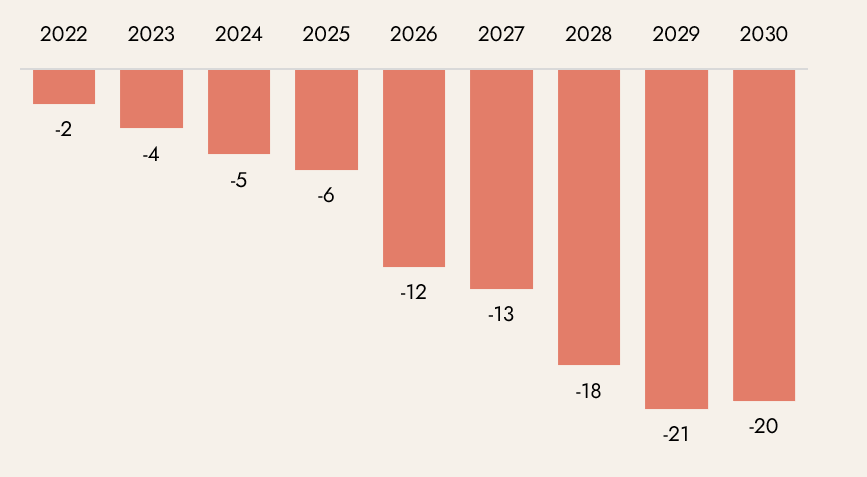
Notes: Excess corporation tax here is the Department’s estimate of “potentially transient corporation tax”.
14. Ireland’s government debt is now set to rise by more than €35 billion by 2030. All the while, the annual interest bill is forecast to more than double, reaching €6.4 billion by 2030.
15. The Government should be saving more, making its tax base more secure, and avoiding aimless drift. It should stick to some rule on how fast it cuts taxes and increases spending. This would help ensure it can support people’s jobs in the next recession and avoid a disastrous repeat of the cutbacks in areas like housing that happened after the last crisis.